Distributed Energy Installation for Residential Housing
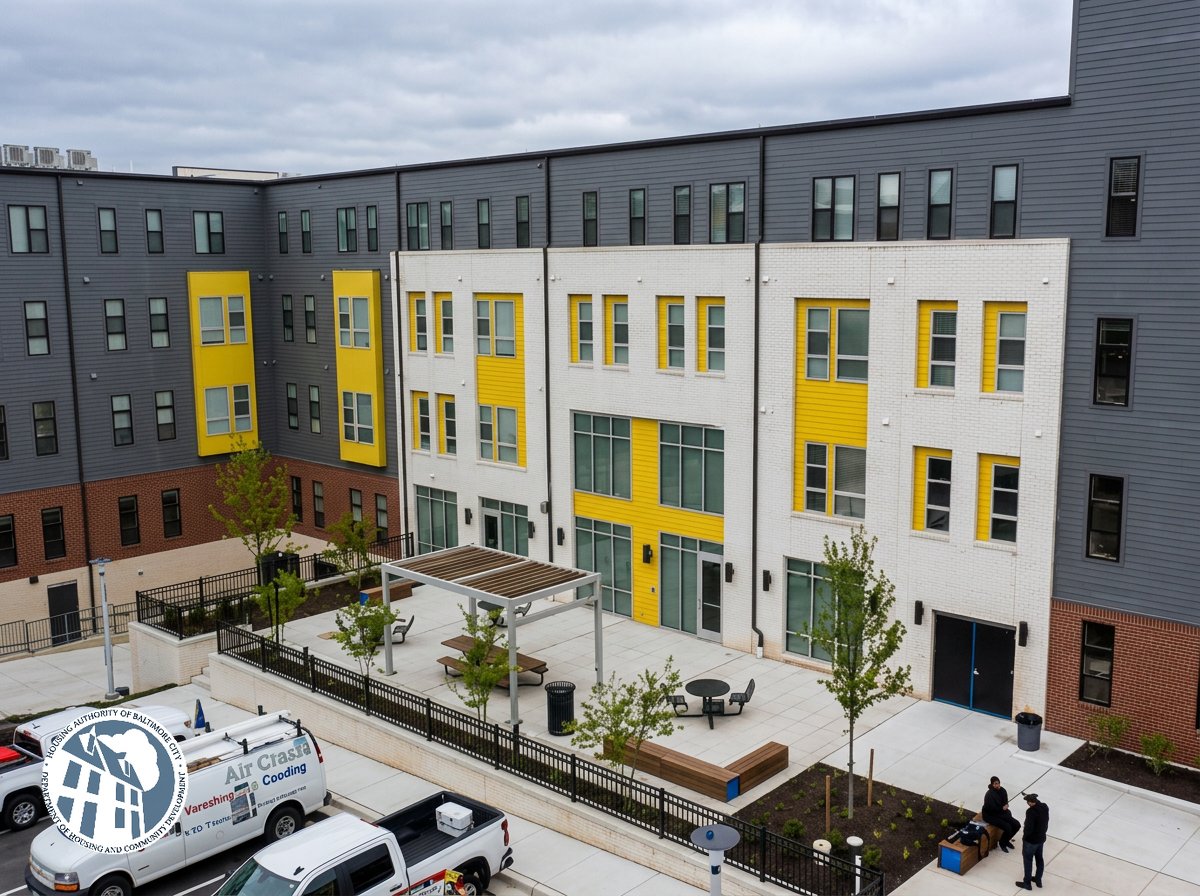
Eight CHP systems bringing distributed on-site energy generation to multi-unit residential communities in Baltimore.
Baltimore Housing Authority · Baltimore, Maryland
Executive Summary
RV Sinkler, as subcontractor and technical consultant to Aegis Energy Services, is supporting the design and installation of eight 35 kW Combined Heat & Power (CHP) units across multi-unit residential complexes for the Baltimore Housing Authority, bringing distributed, on-site energy generation to urban public housing. The project pairs each complex's existing thermal demand with right-sized CHP capacity, improving energy efficiency while adding a layer of resiliency for residents who depend on these buildings for heat, hot water and reliable power. RV Sinkler is providing technical oversight support throughout commissioning, helping ensure each installation meets local energy code and utility interconnection standards as it comes online.
Right-Sized Distributed Energy
This project is not simply an equipment installation. The engineering approach matches CHP capacity with the existing thermal requirements of each residential complex, so generation is sized around how the buildings actually consume energy.
- Existing thermal-demand assessment
- Right-sized CHP capacity
- Distributed on-site generation
- Energy efficiency
- Residential energy resiliency
- Integration with existing facilities
- Technical oversight
- Commissioning
Supporting Essential Residential Energy Needs
Reliable energy infrastructure carries particular weight in multi-unit residential environments, where residents depend on building systems for heat, hot water and reliable power.
The project applies distributed-energy technology to real-world community infrastructure, adding on-site generation to buildings that are already occupied and in daily use.
- Heat
- Hot water
- Reliable power
Technical Consulting Support From Design Through Commissioning
- Design Support
- Installation Support
- System Integration
- Technical Oversight
- Commissioning
- Compliance
Aegis Energy Services holds prime contract responsibility. RV Sinkler is supporting the effort as subcontractor and technical consultant, covering:
- CHP system design support
- Installation support
- Systems integration support
- Technical oversight through commissioning
- Commissioning support
- Local energy-code compliance support
- Utility-interconnection coordination
System Configuration
- System
- Combined Heat & Power (CHP)
- Number of Units
- 8
- Unit Capacity
- 35 kW
- Application
- Multi-unit residential housing
- Energy Model
- Distributed on-site generation
- Project Location
- Baltimore, Maryland
- Status
- Ongoing
- Prime Contractor
- Aegis Energy Services, Inc.
What Defines This Project
- 8 CHP units / distributed energy generation across multi-unit residential complexes
- Technical oversight support through commissioning and code/utility compliance
- Advances distributed energy efficiency and resiliency for urban public housing, as subcontractor to Aegis Energy Services
Designed for Real-World Integration
- Local energy-code requirements
- Utility-interconnection standards
- Commissioning oversight
- Existing-building integration
Distributed Energy for Urban Communities
The Baltimore Housing project demonstrates RV Sinkler's ability to apply distributed-energy technologies beyond traditional commercial and industrial environments.
By supporting the integration of CHP units into existing multi-unit residential infrastructure, RV Sinkler is helping advance a more efficient and resilient approach to delivering essential building energy services.
Outcome
An ongoing program that is advancing energy efficiency and resiliency across multi-unit residential complexes, with RV Sinkler providing technical oversight support so each installation comes online to local energy code and utility interconnection standards.
Discuss Distributed Energy Projects
Bring RV Sinkler in early. We will review the requirements and define the engineering, procurement and construction path to commissioning.